
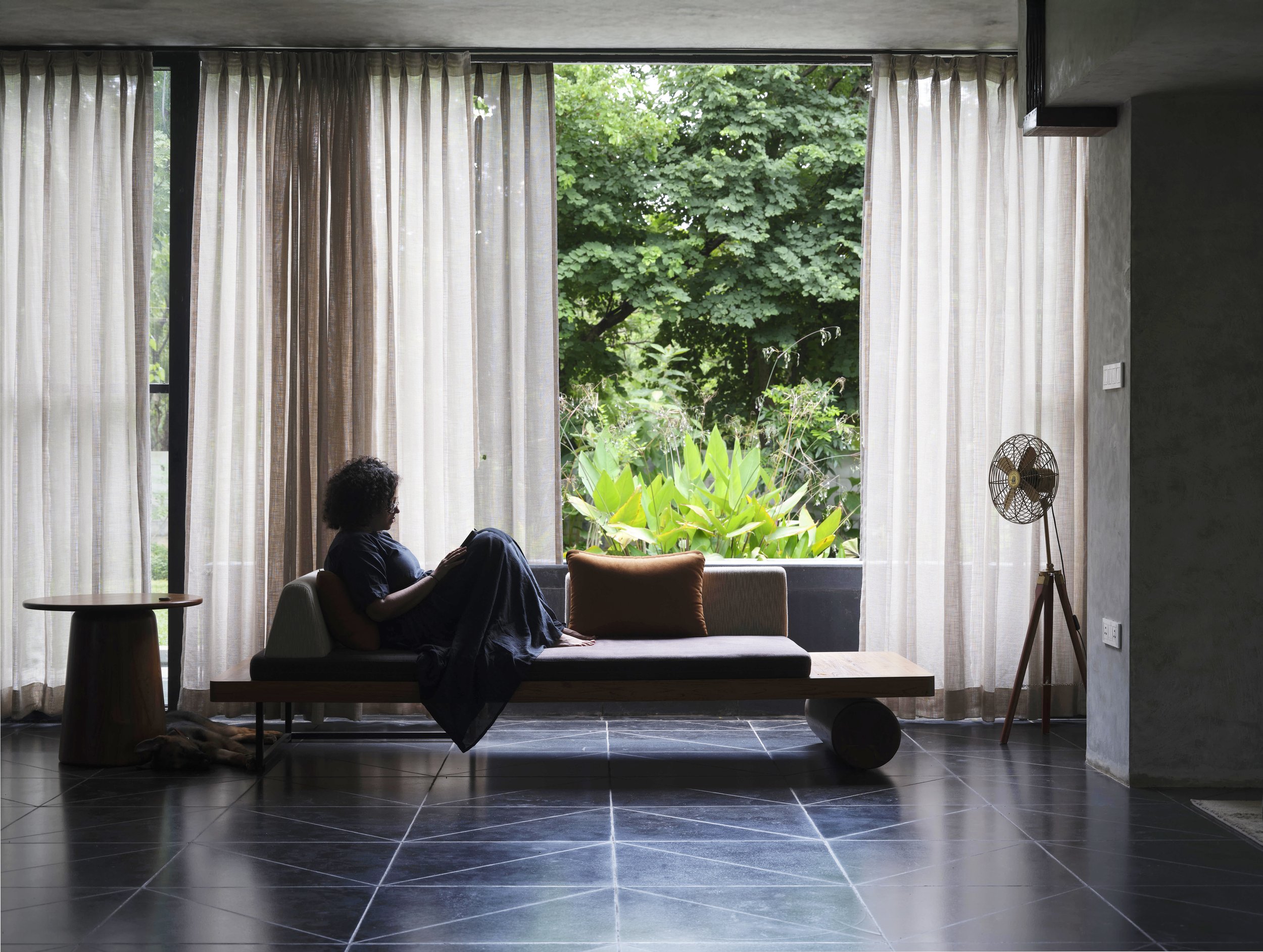
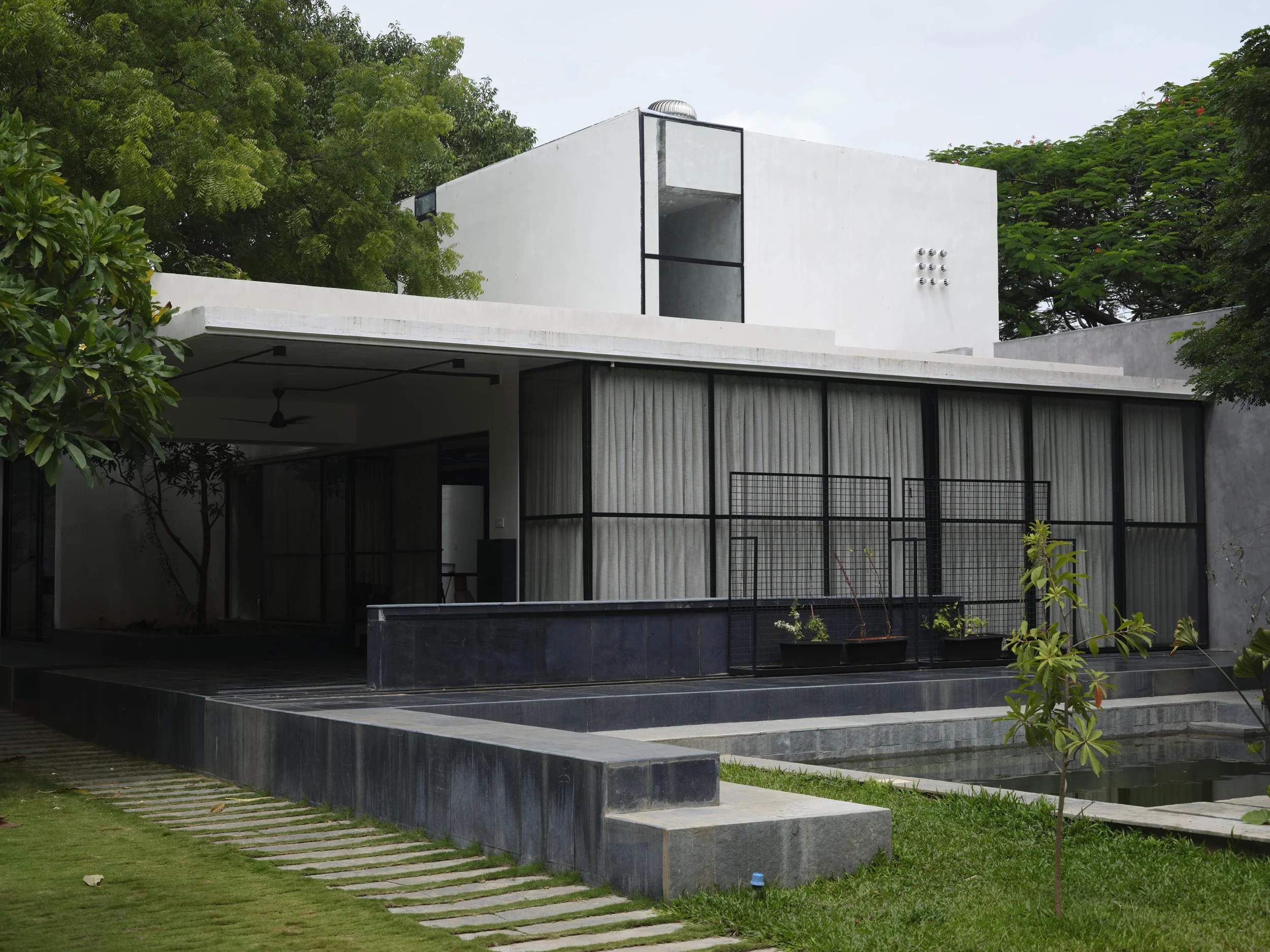
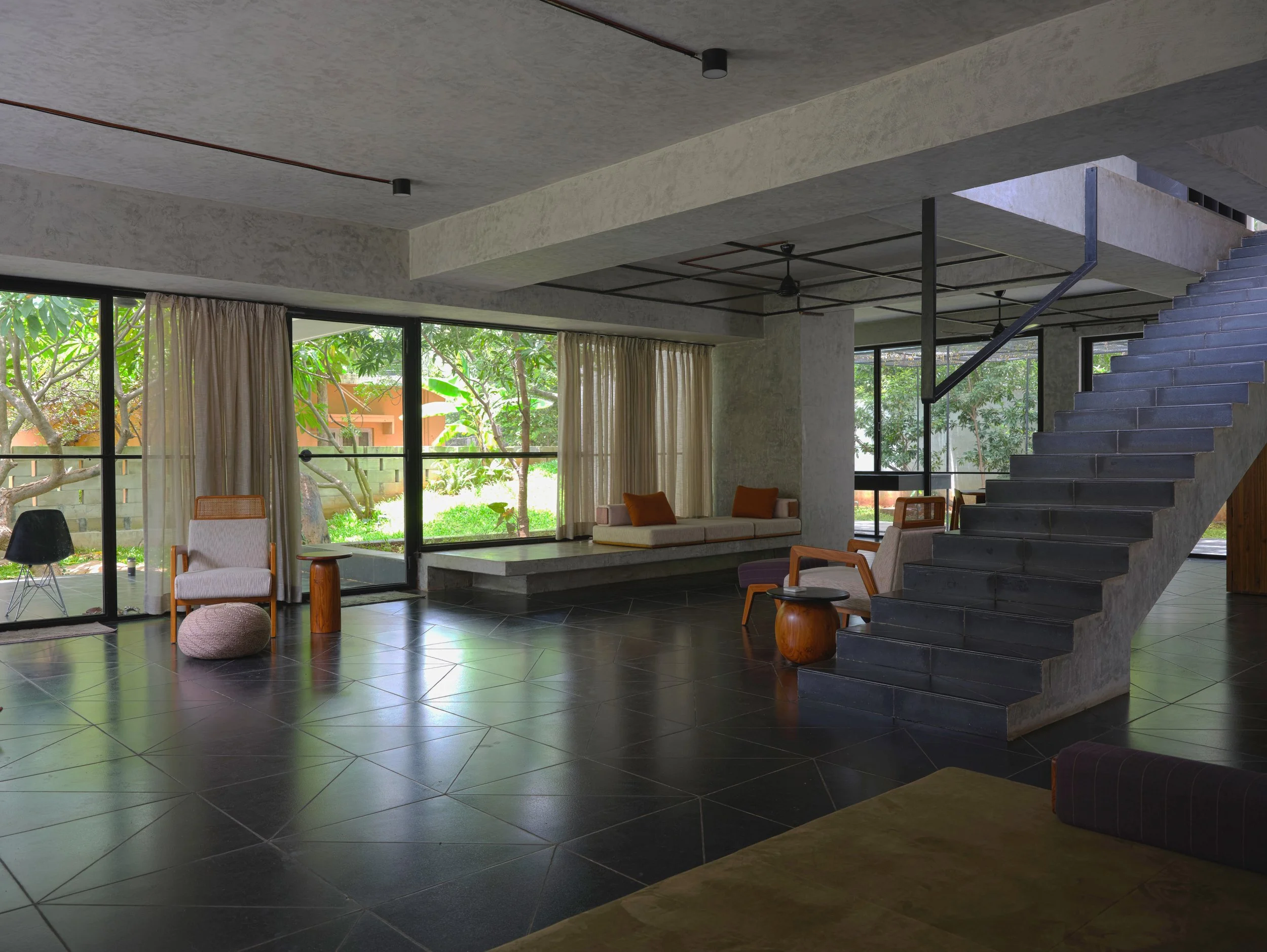
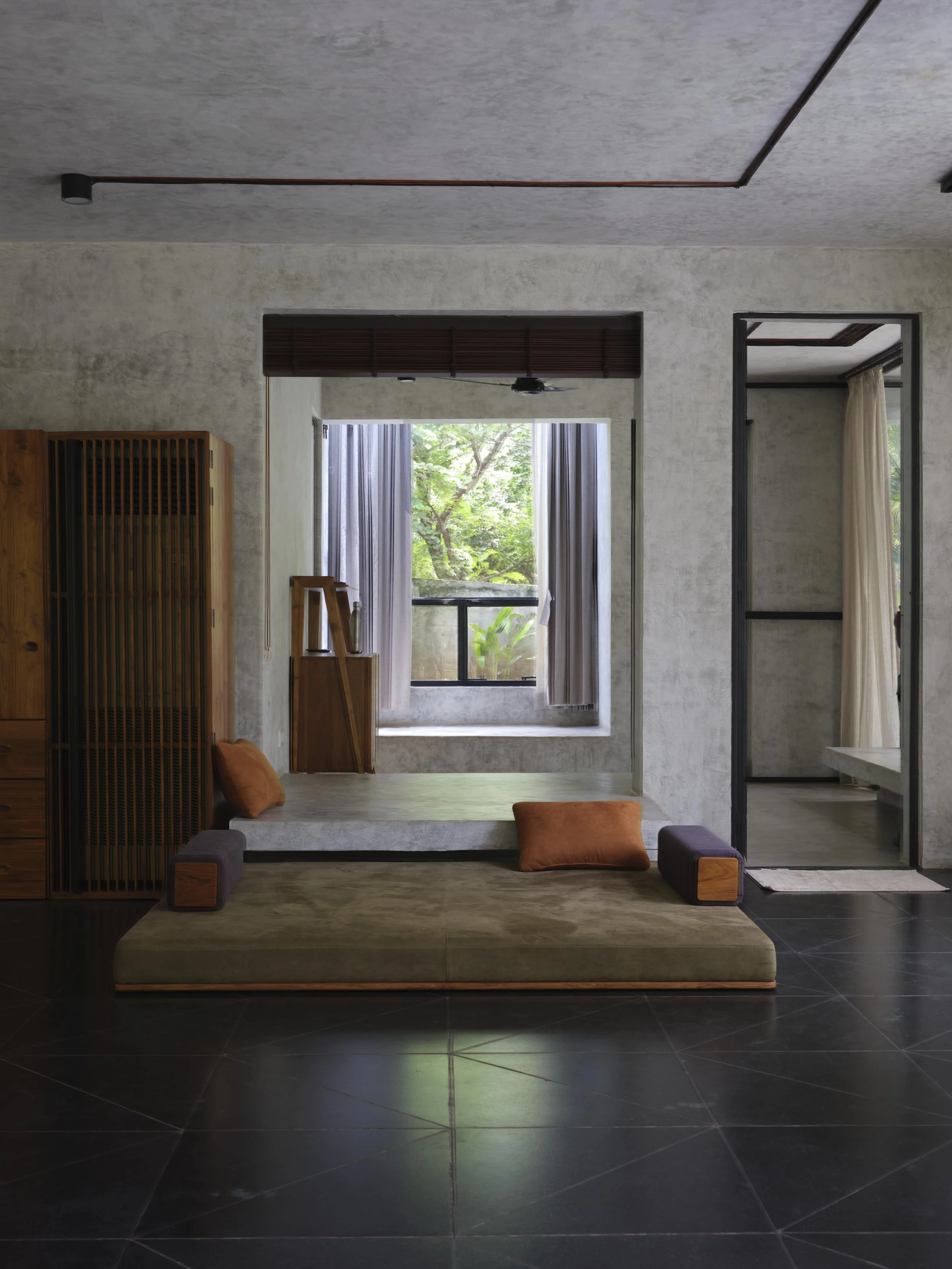
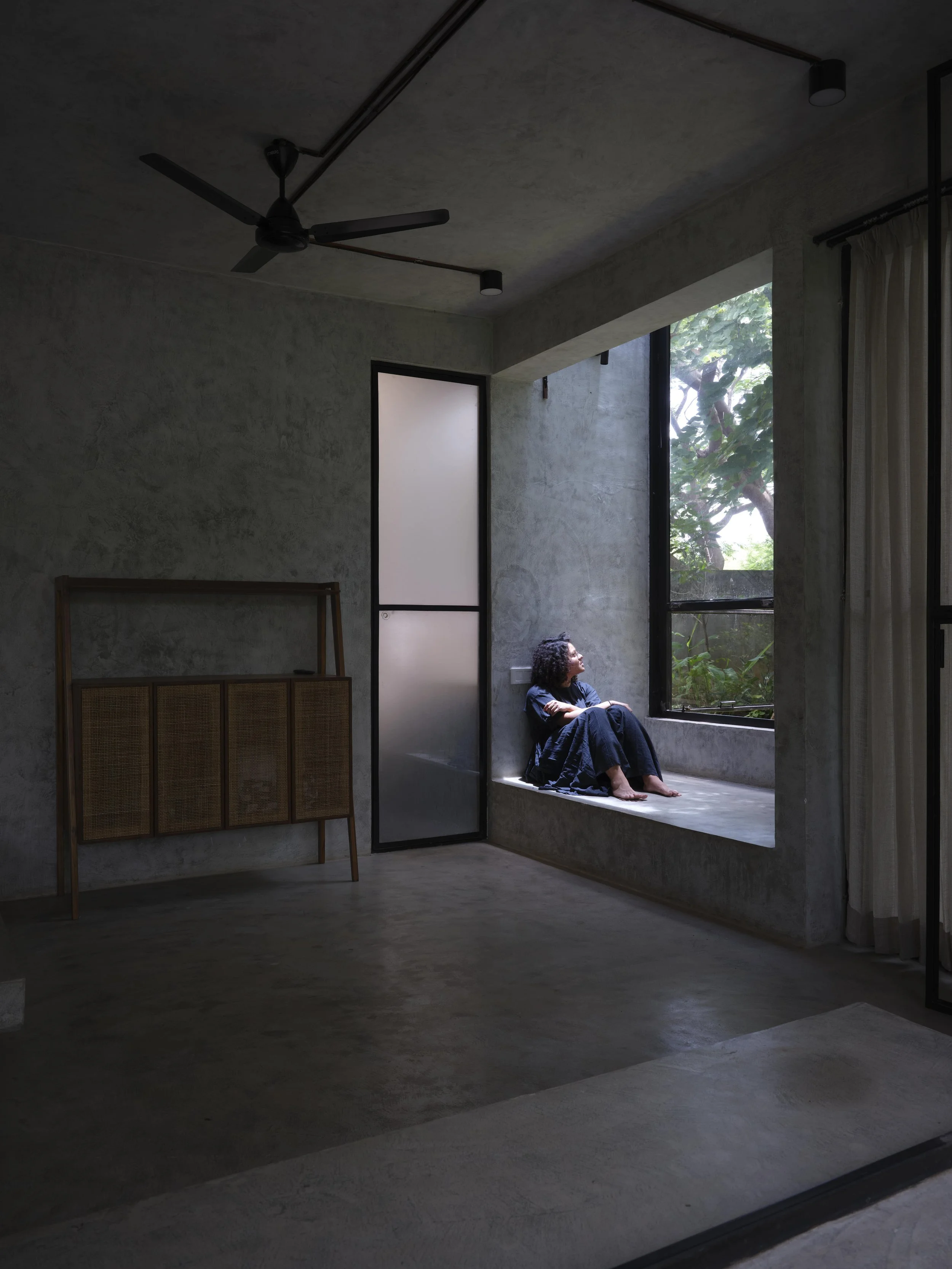
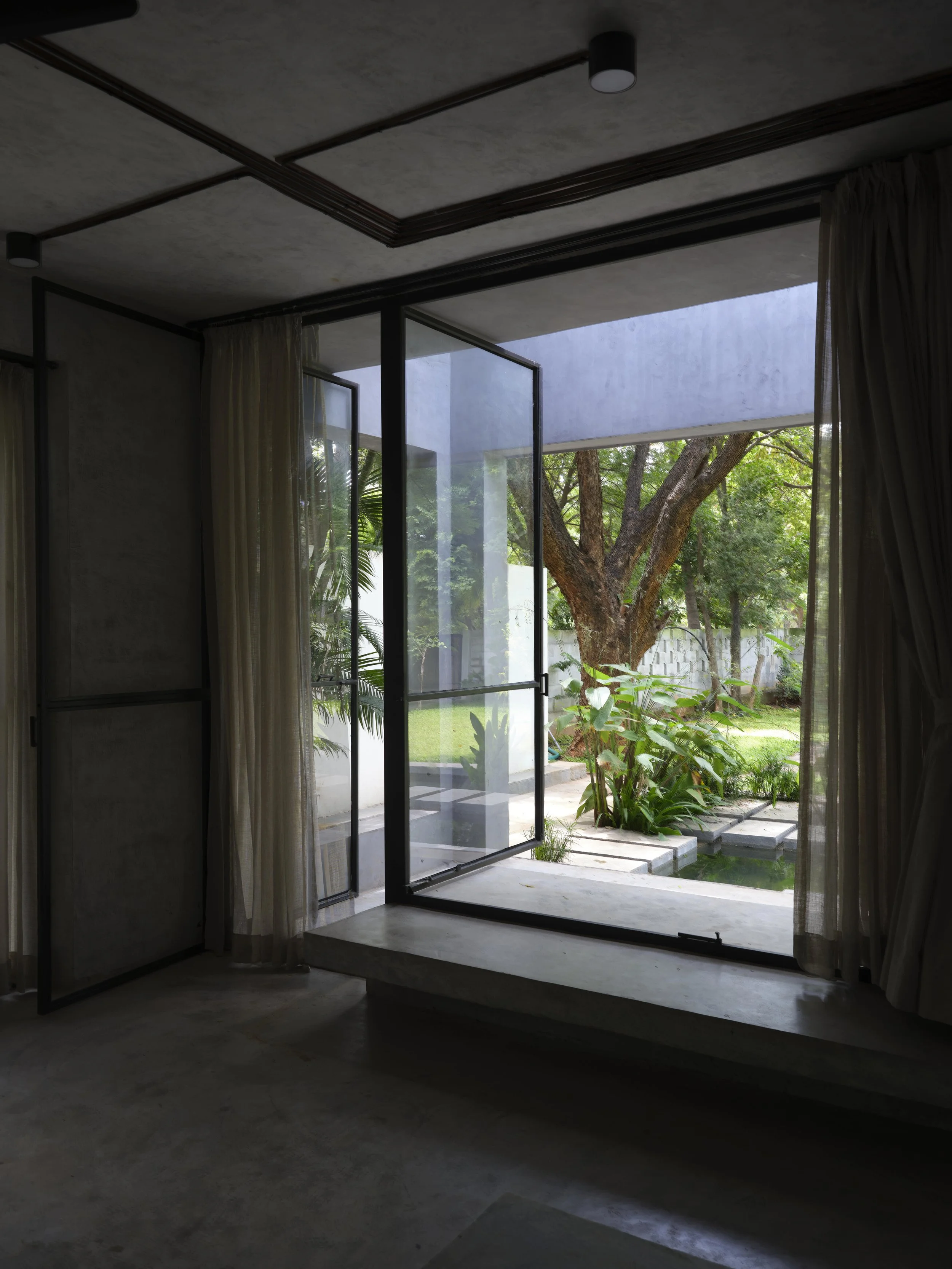
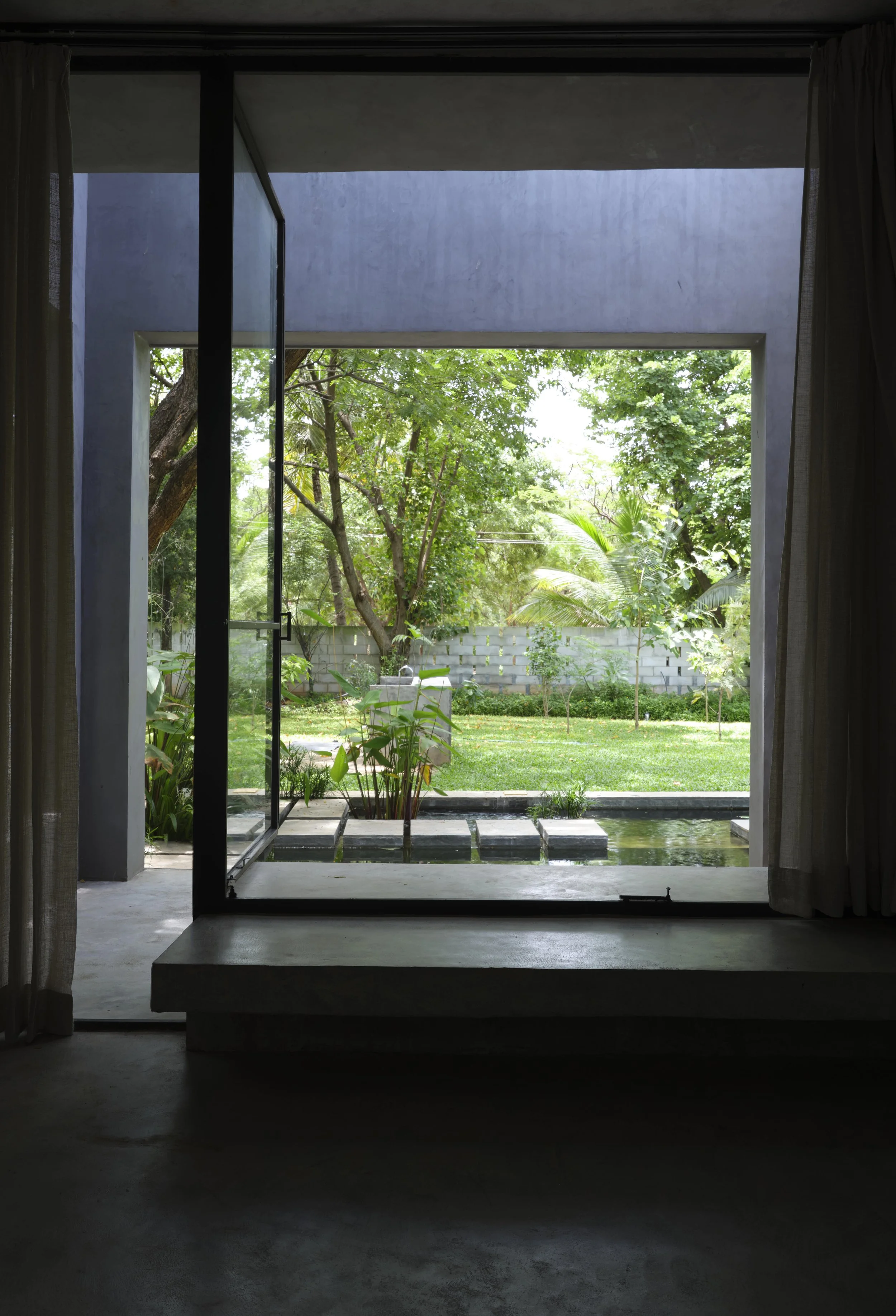
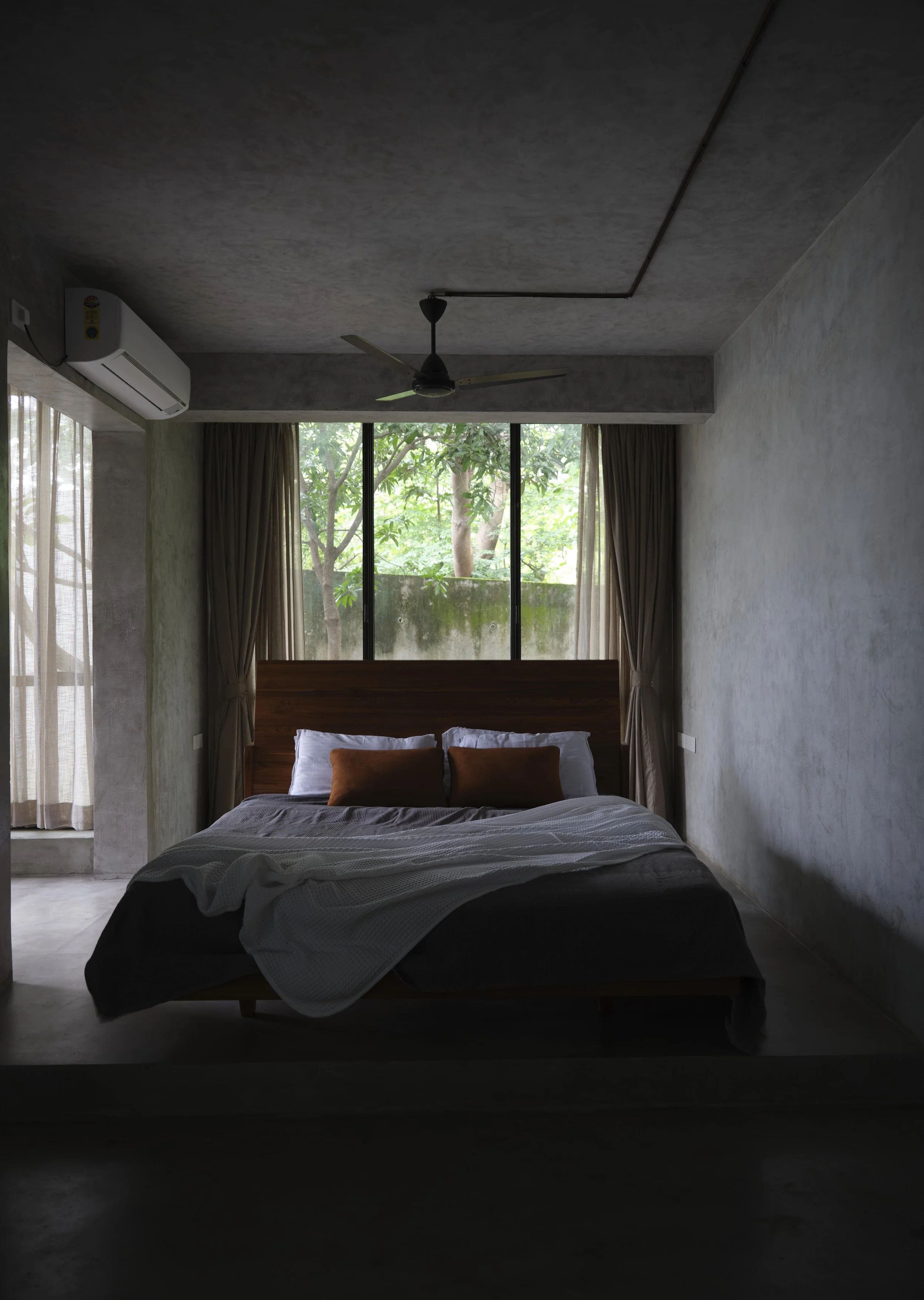
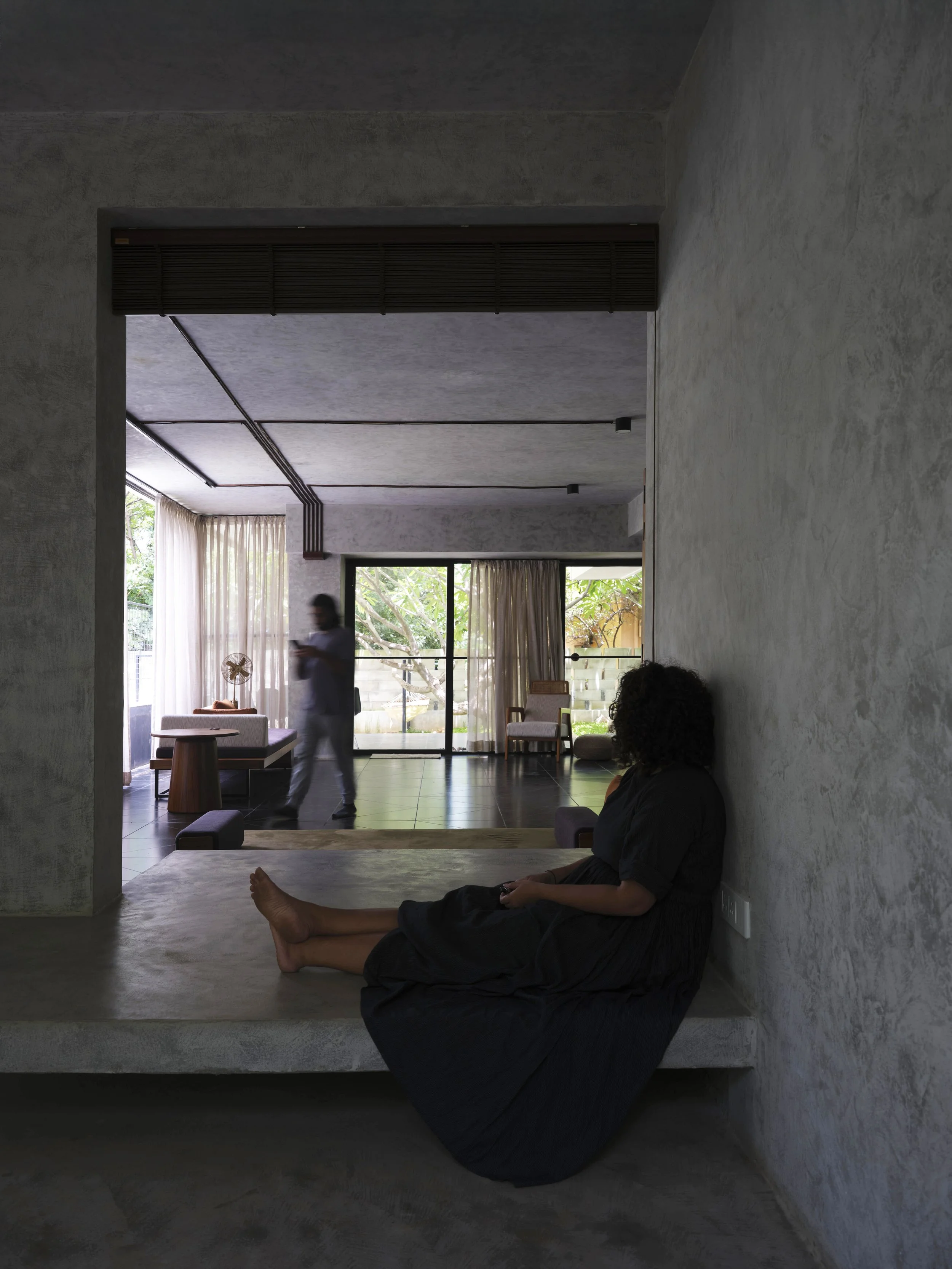
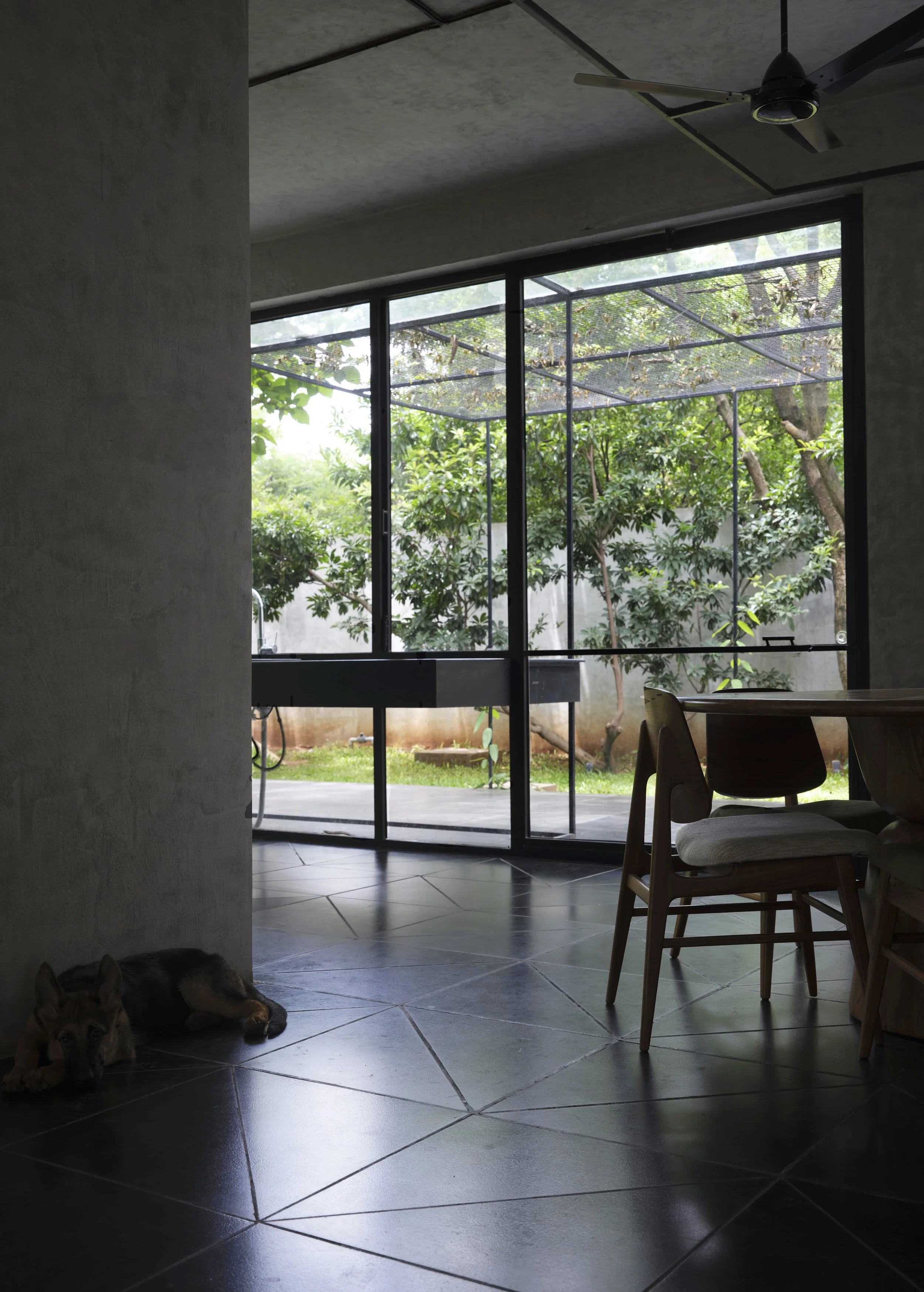
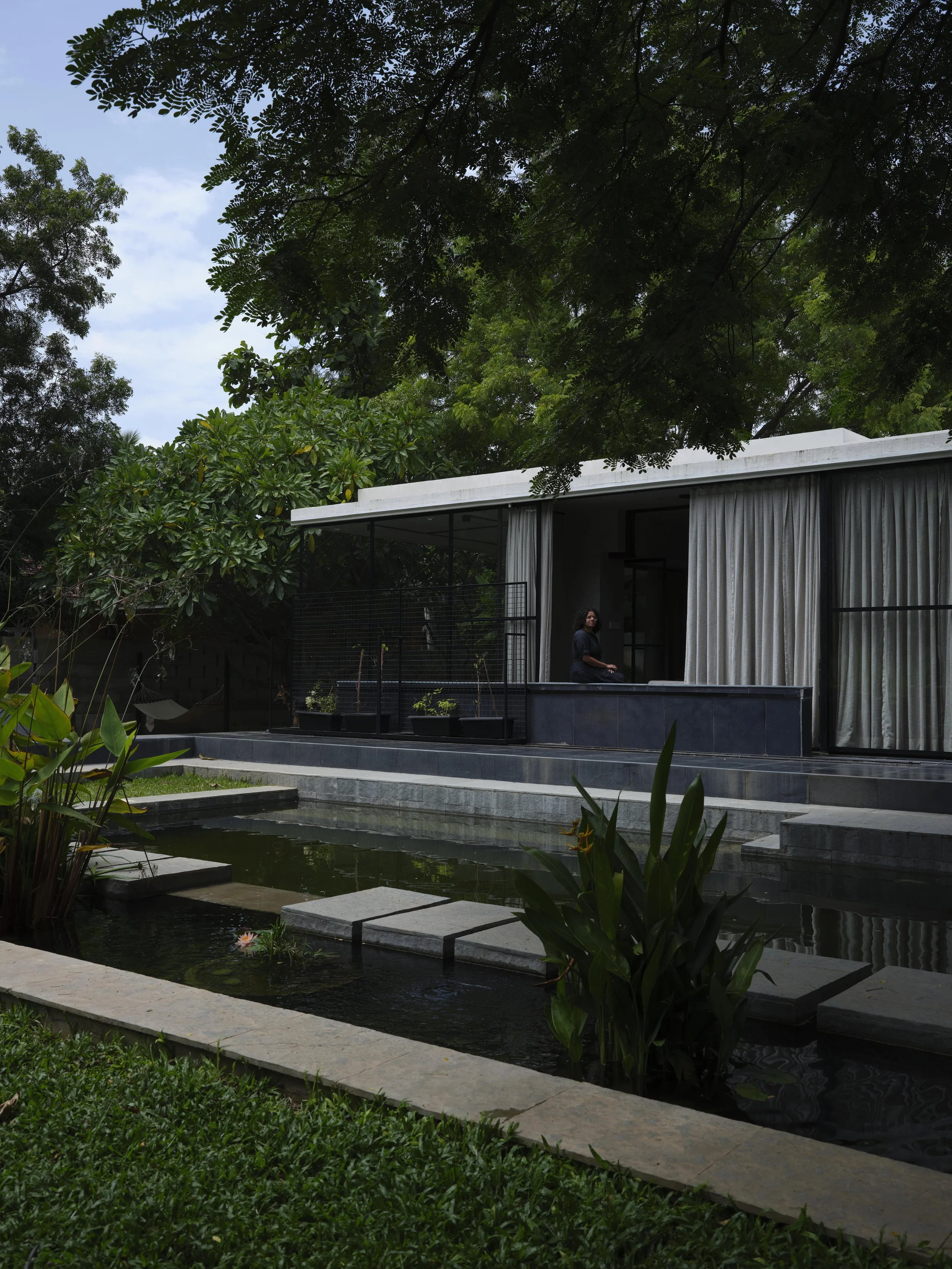
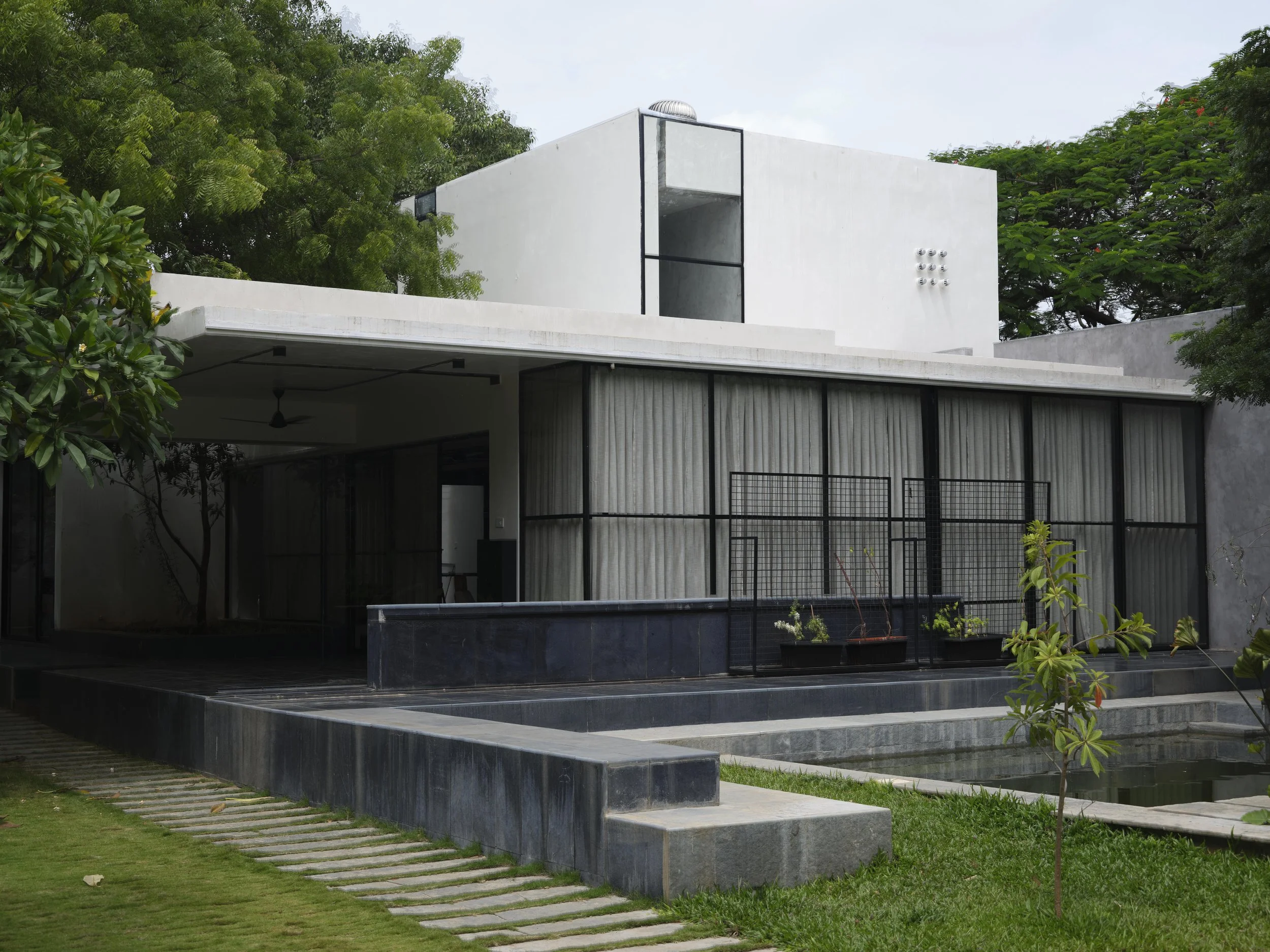
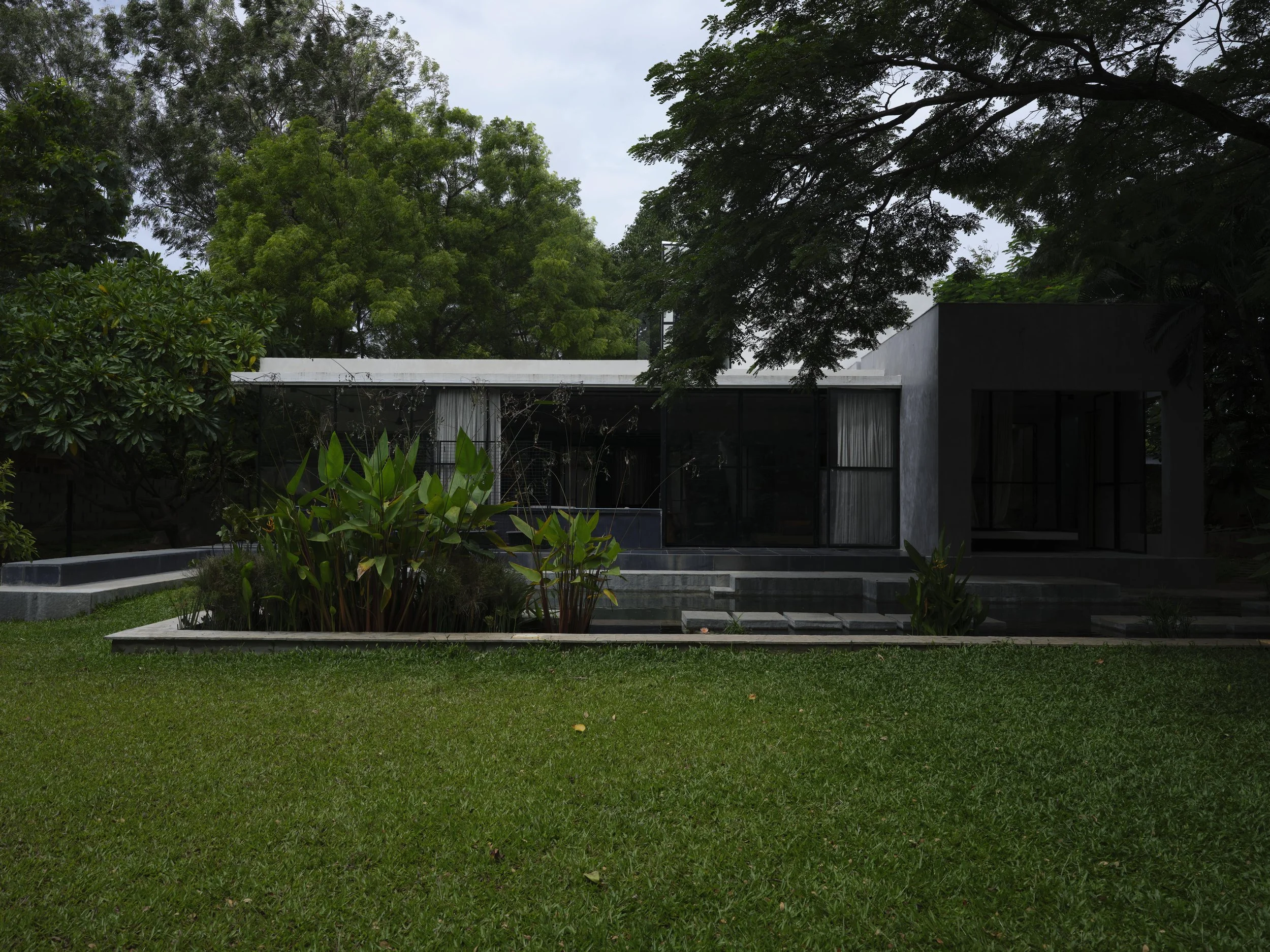
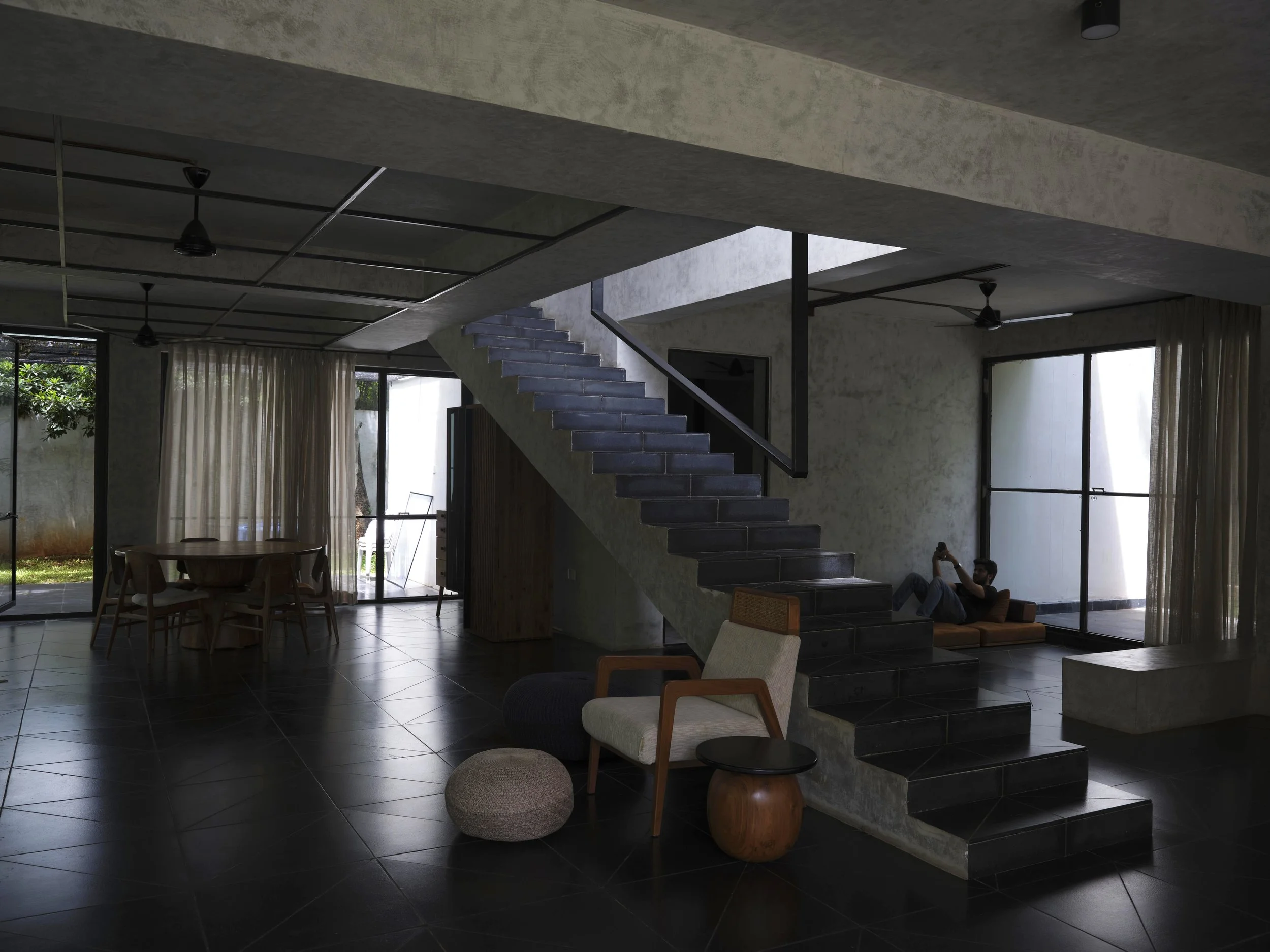
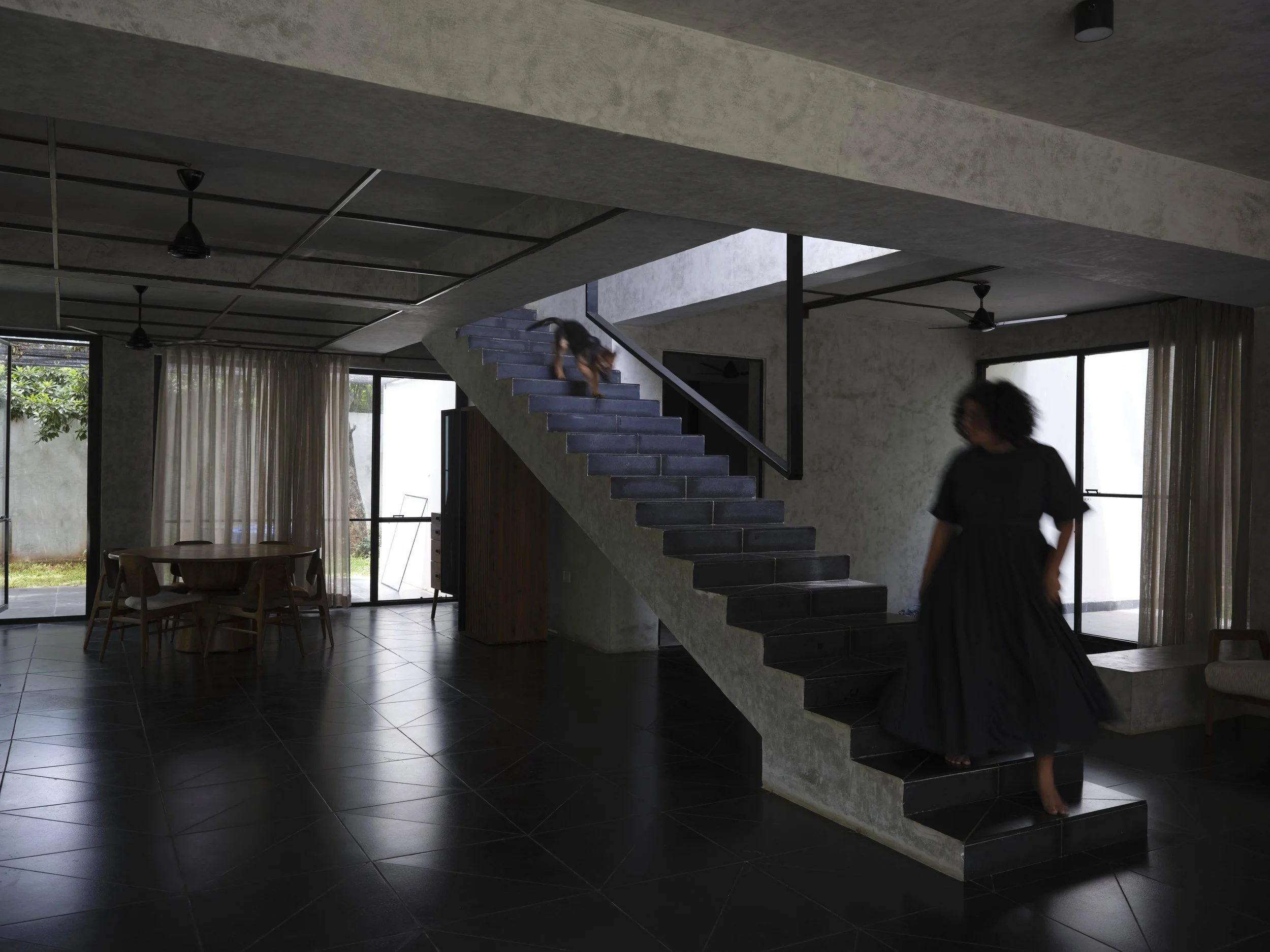
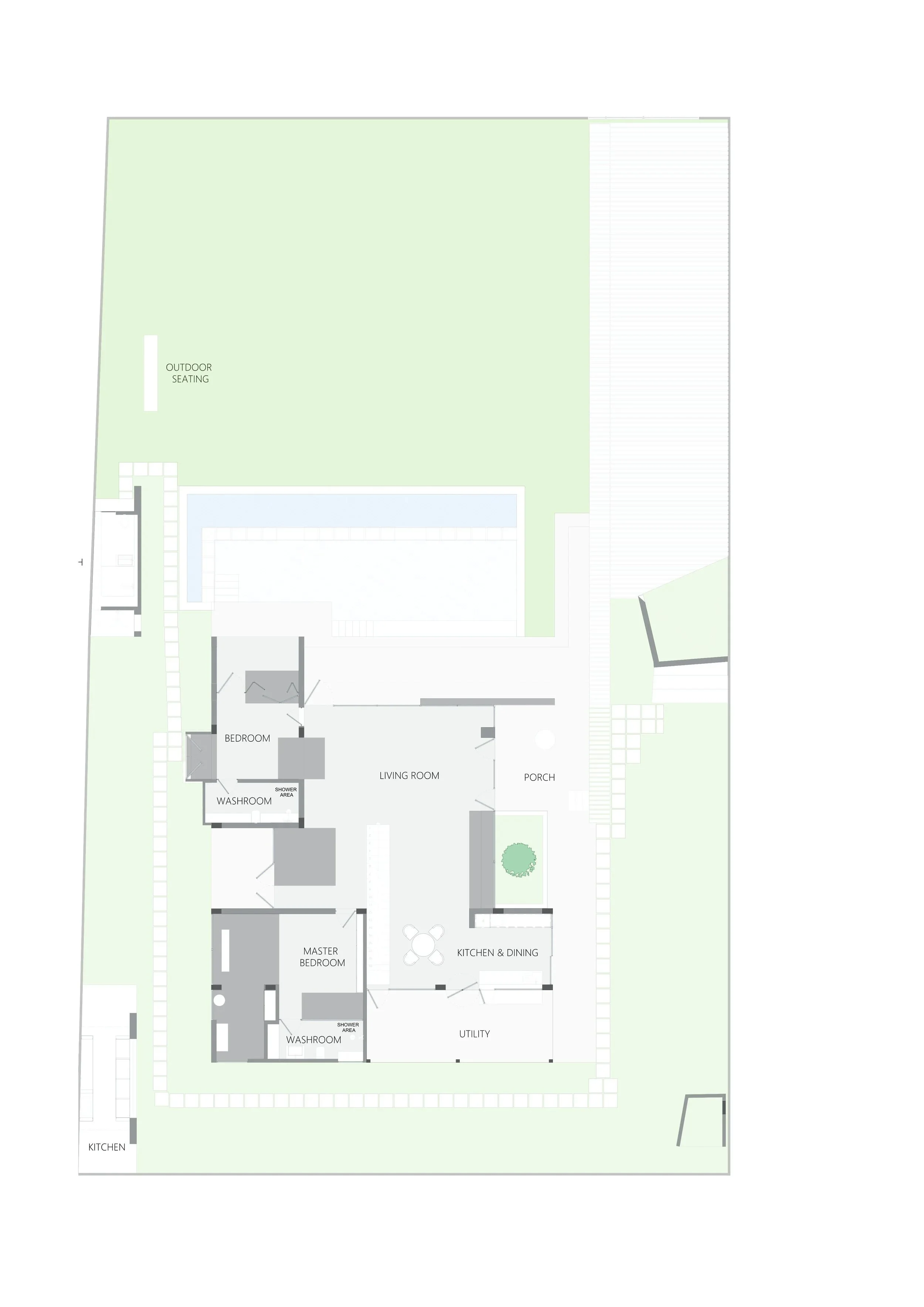
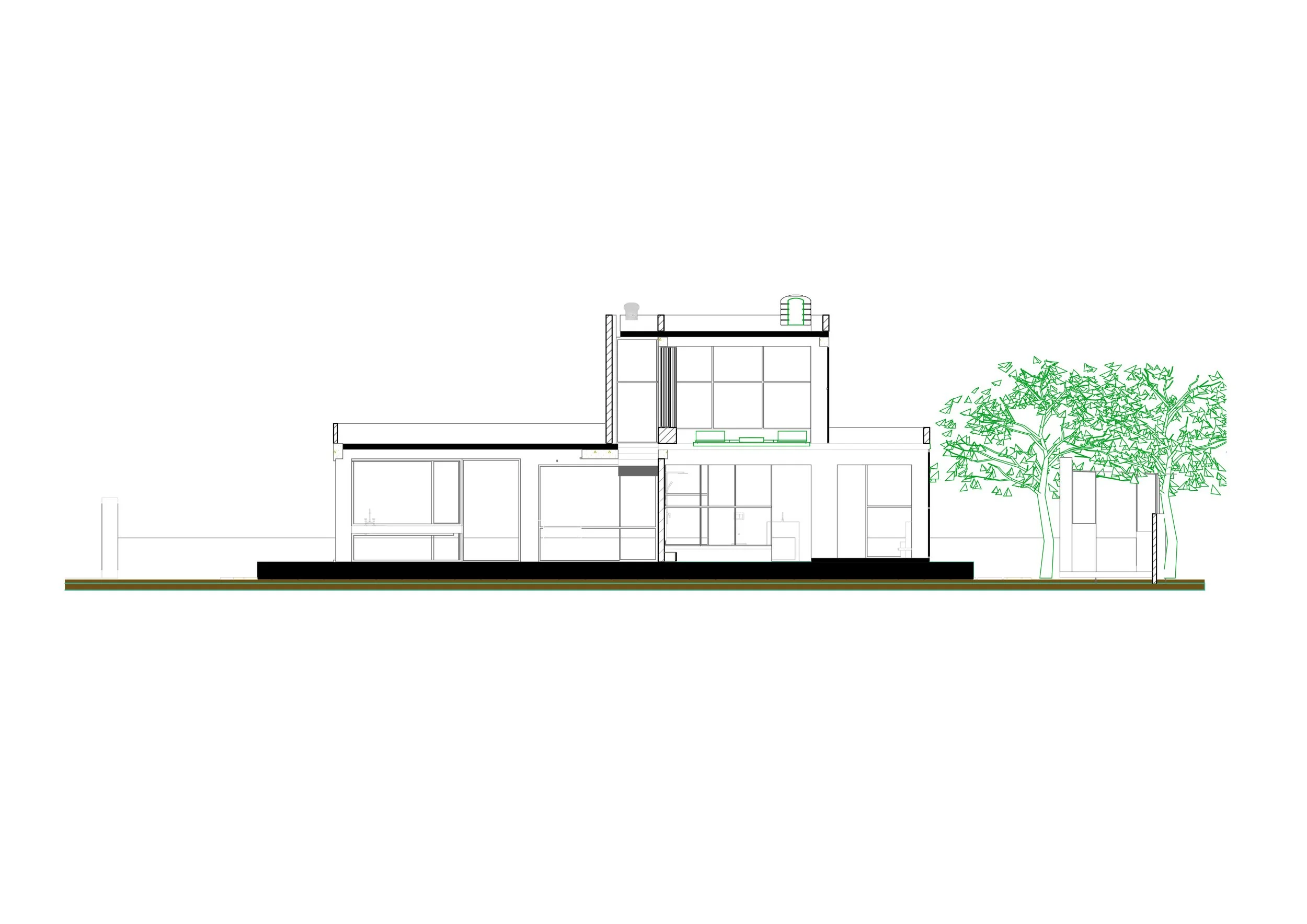
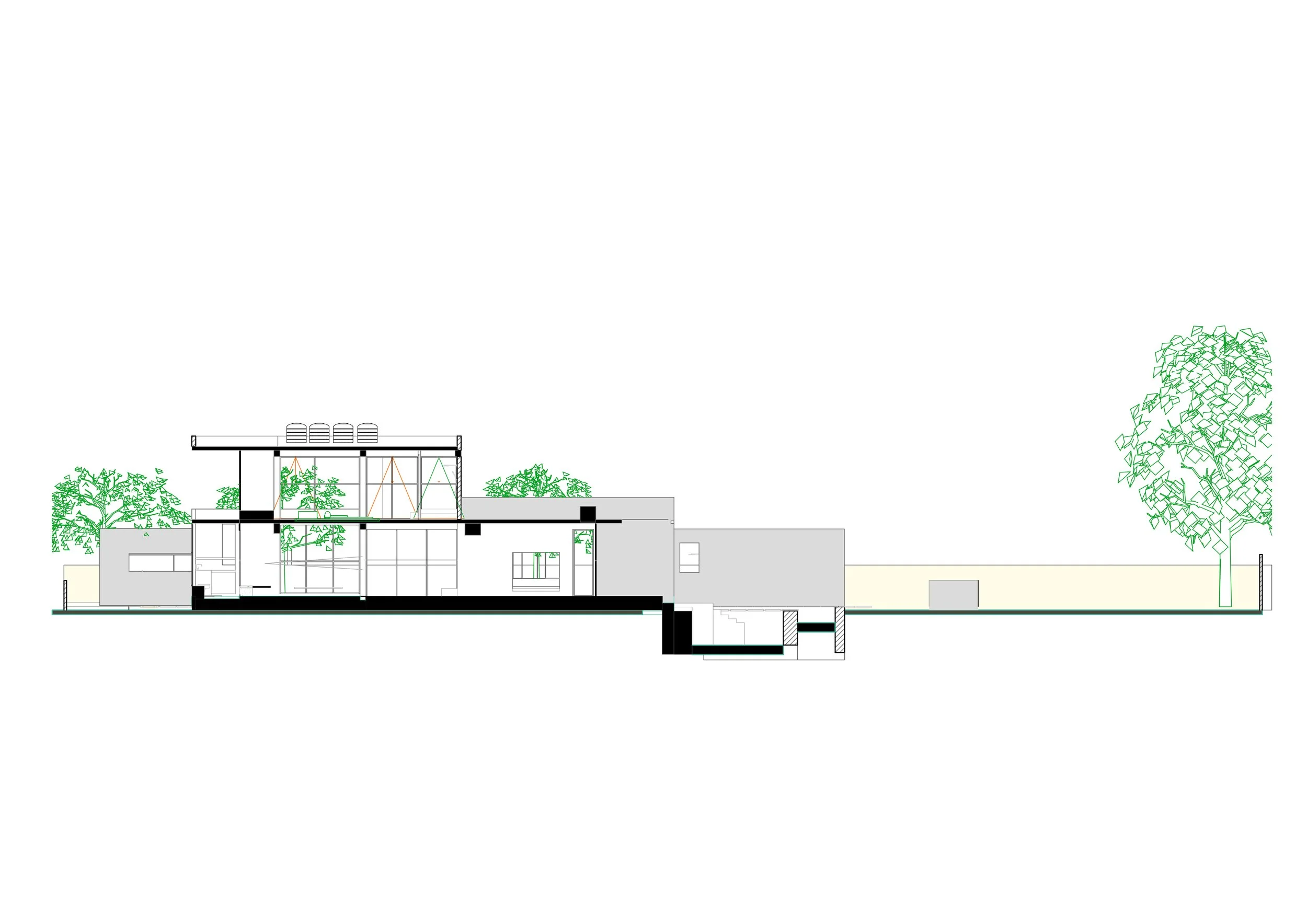
The essence the house sought to capture was the quiet presence of a person resting beneath the shade of a tree. This idea shaped every decision—from its muted grey-and-black interiors to the generous openings carved on all sides. These apertures invite constant breezes, allow effortless cross-ventilation, and continually pull one’s gaze outward toward the light.
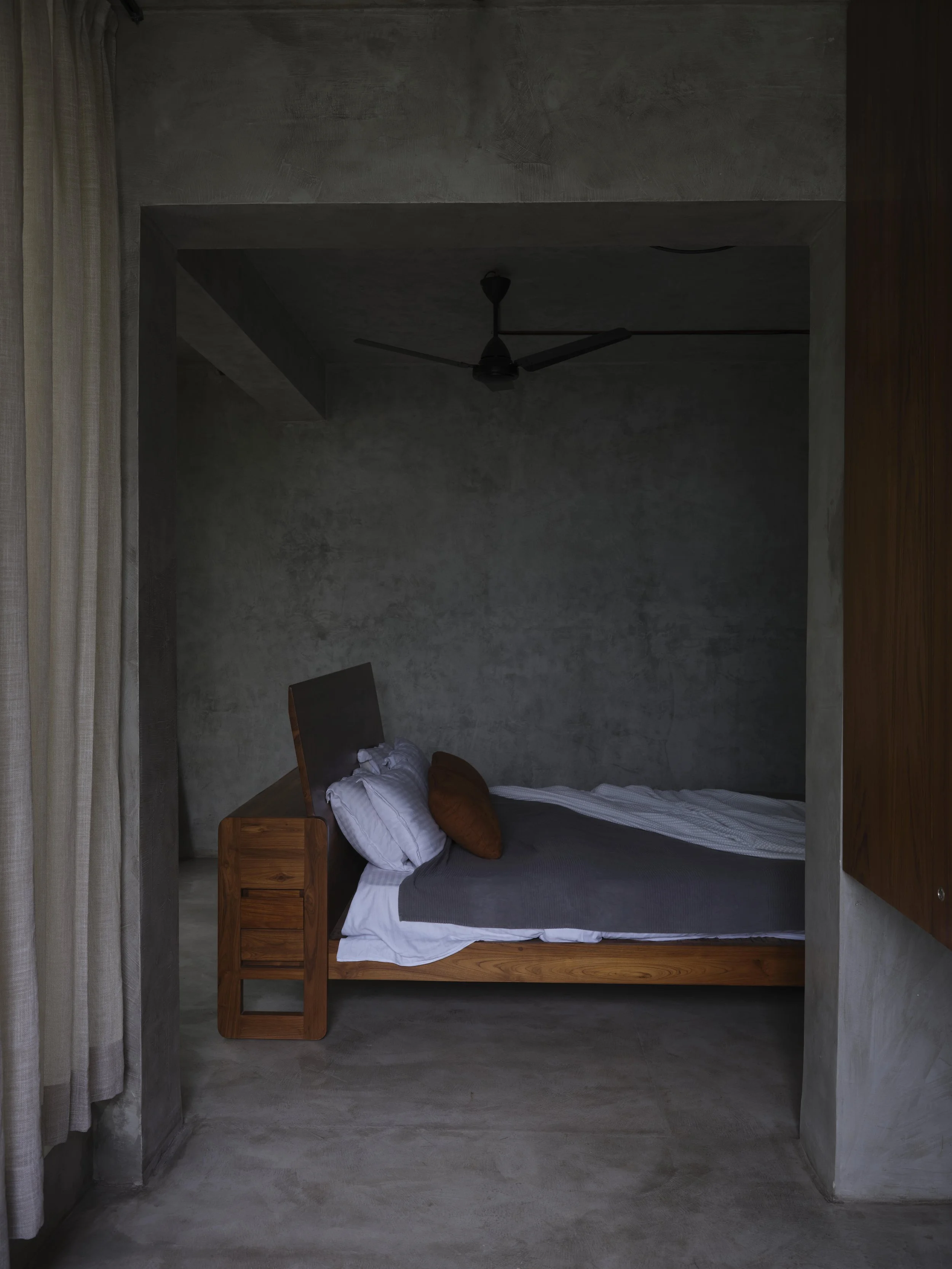
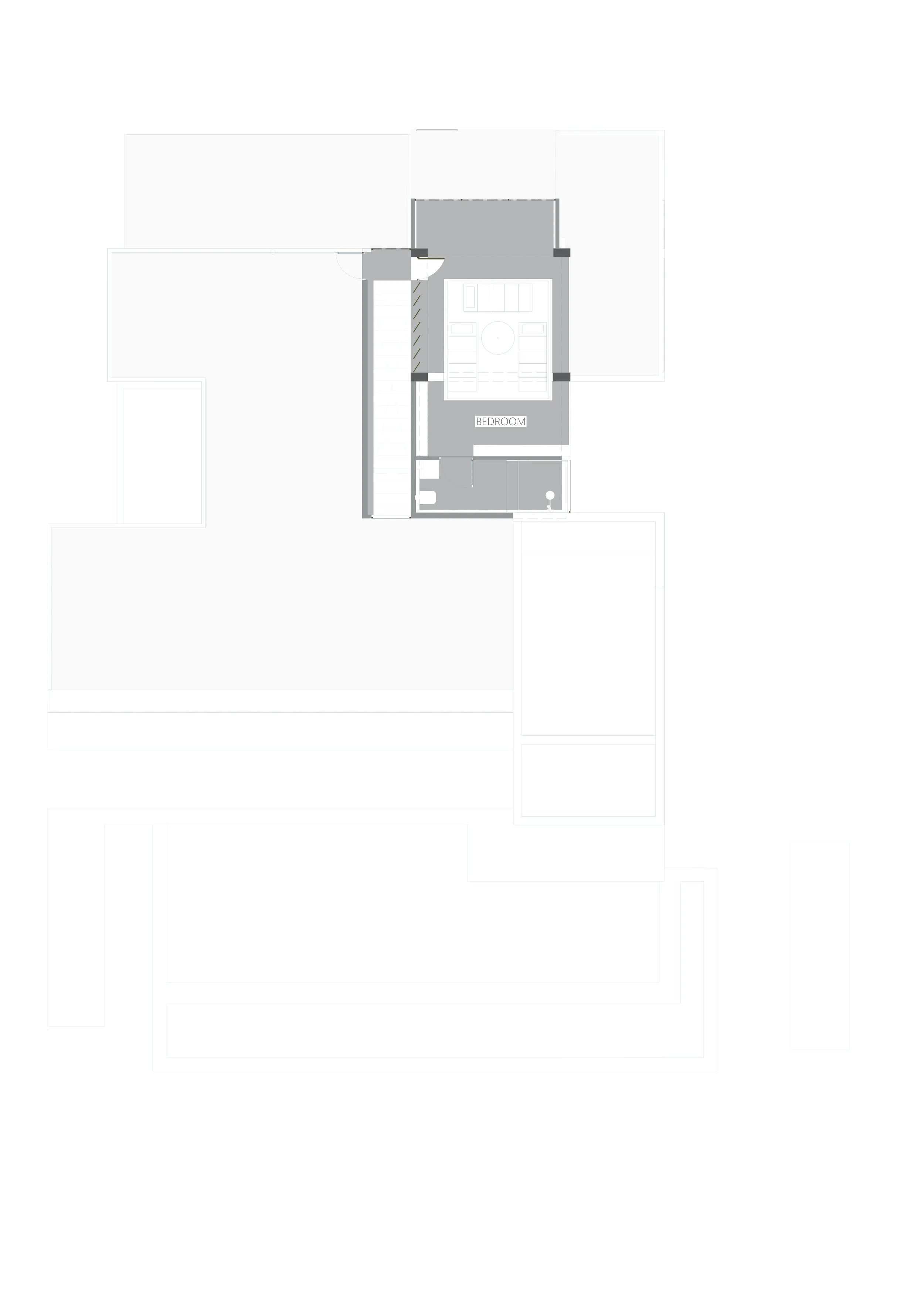
Because it was envisioned as a family weekend home, openness became a central priority. The plan dissolves boundaries, encouraging communal interaction rather than retreat. Even the bedrooms forgo permanent doors, reinforcing the intention that the house becomes a place of togetherness rather than isolation.
Light and shadow became the primary materials. The moving silhouettes cast by the trees, and the shifting sunlight that filters through the openings, create moments of stillness that animate the spaces throughout the day. The architecture is a quiet play between brightness and darkness, between enclosure and exposure.
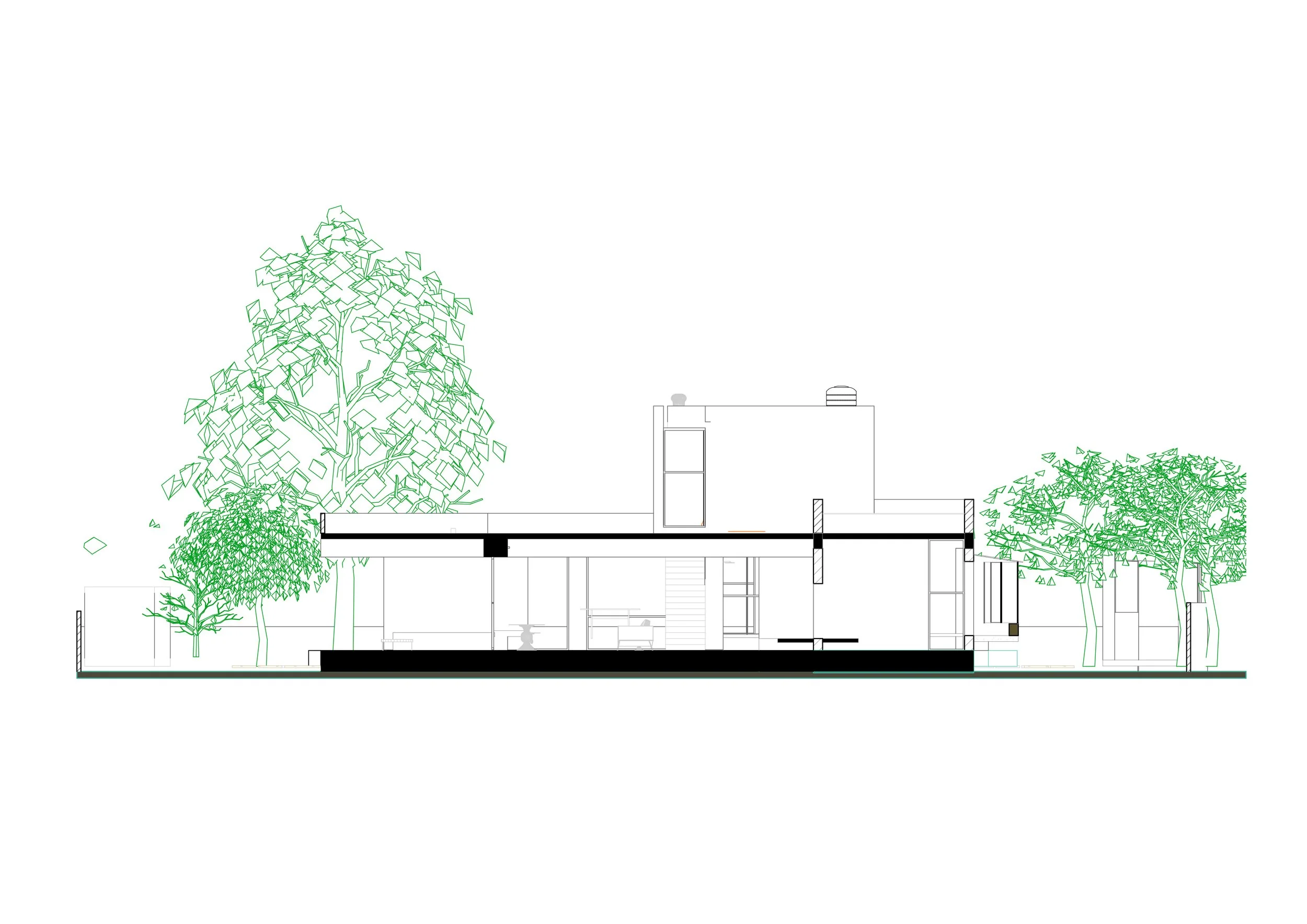
Every square foot of the house maintains a visual relationship with the sky. At the heart of the plan, a central staircase rises to the first floor beneath a slender slit skylight. This opening works double duty—as a dramatic light well during the day and as a night-flush system that draws warm air upward, enabling continual passive airflow.
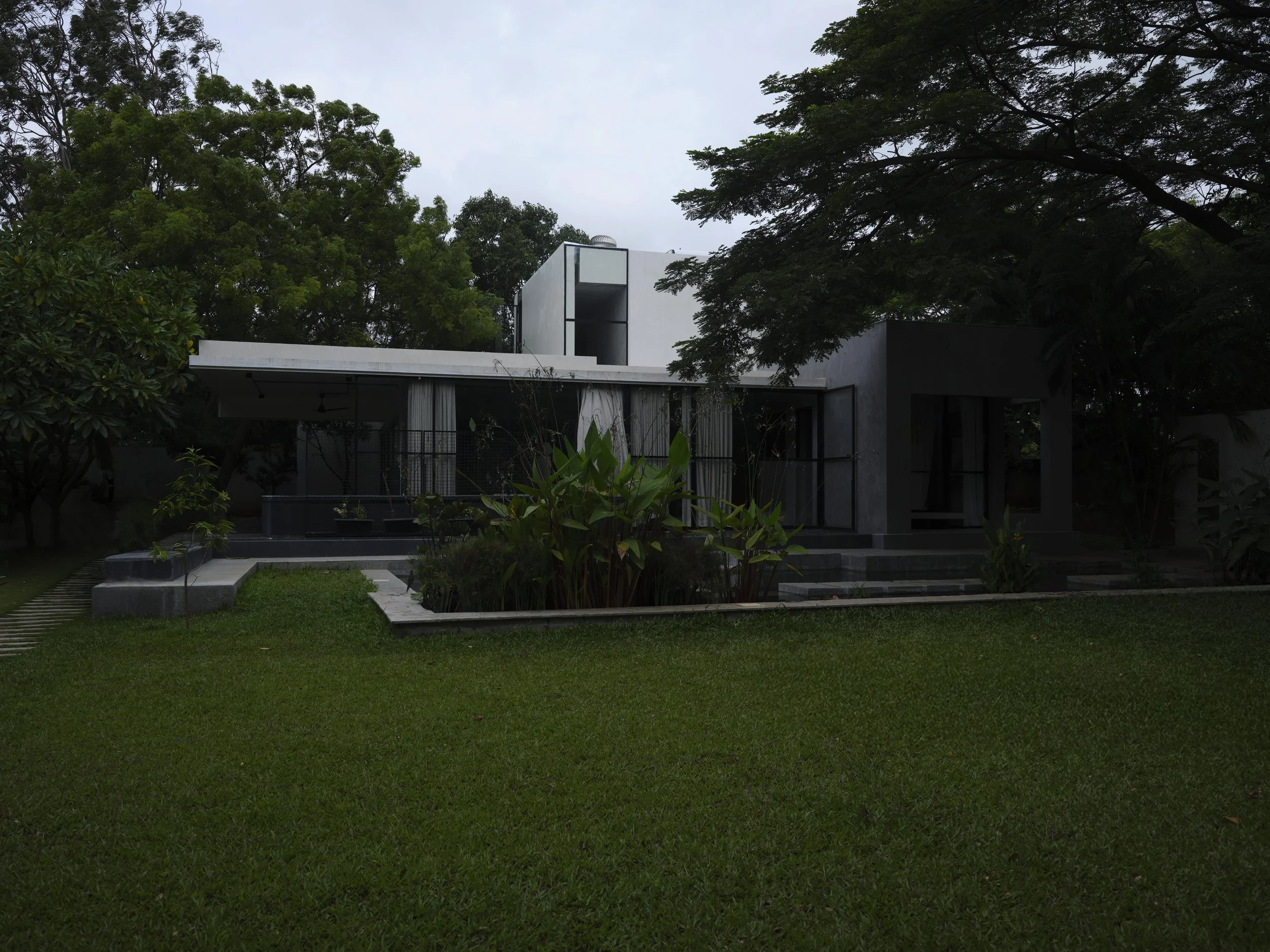
The site itself was blessed with a beautifully layered canopy of existing trees, carefully grown and curated over the years. Rather than imposing on this natural order, the house was nestled directly within the tree cover. Courtyards and cut-outs were shaped in response to the trees already standing, allowing the architecture to weave itself quietly into the landscape.
The surrounding terrain was left simple—gentle mounds guiding visitors toward the entrance. This subtle landform design lets the house feel as though it settles into the ground, rather than rising above it.
In the end, the architecture became a process of subtraction rather than addition. A recognition of presence through absence. As the project reminds us: I only know that “I am.” I don’t know what I am; I can only know what I am not.
“Ultimately, the design evolved as an act of subtraction rather than addition—a search for presence through restraint. The architecture emerges from what is removed, not what is imposed. As the project quietly suggests: I know only that I am. What I am is defined not by assertion, but by the boundaries of what I choose not to be.”